


Collapsible Fish Tank
Resident freshwater rainbow trout adults average between 1 and 5 lb (0.5 and 2.3 kg) in riverine environments, while lake-dwelling and anadromous forms may reach 20 lb (9 kg). Coloration varies widely between regions and subspecies. Adult freshwater forms are generally blue-green or olive green...
- Fast Delievery
- Quality Assurance
- 24/7 Customer Service
Product Introduction
Micro filter (or curved screen):
Its main function is to facilitate the mechanical filtration of the microporous sieve, intercept and remove particulate matter removed by the solid-liquid separator method, and further reduce the organic load of the subsequent treatment unit's flow bed filter.
Arc screen and microfilter:
Arc screen: The arc screen is derived from the separation device of mineral sand screening. In aquaculture treatment, it is necessary to use a fixed screen with arc shaped gaps arranged perpendicular to the inflow direction to achieve solid-liquid separation of the body.
The processing energy of the curved screen is: the most common gap between the screens is 0.25 mm, which can effectively remove about 80% of solid particle matter with a particle size smaller than 70 µ m;
Arc-shaped screens cannot replace rotary microfiltration machines: although arc-shaped screens are claimed to be similar to rotary microfiltration machines, their most significant advantage lies in the energy saving effect of requiring additional mechanical action. In fact, the curved screen achieves solid-liquid separation by losing the potential energy of the incoming material, and cannot effectively reduce energy consumption. However, arc-shaped screens do not have advantages over traditional microfiltration machines in terms of efficiency in removing suspended solids from aquaculture organisms or energy consumption. Especially for the curved screen, it is necessary to brush the screen twice every hour when the breeding load is high. At present, it is not yet possible to effectively solve the problem of dynamic cleaning of curved screens at home and abroad. This problem can be solved, but farmers cannot afford the expensive arc screen backwash system. Moreover, domestic stainless steel screens also have the problem of material not being resistant to sea corrosion. Therefore,
But farmers cannot afford the expensive arc-shaped screen backwash system. Moreover, domestic stainless steel screens also have the problem of material not being resistant to sea corrosion. Therefore, it is difficult to achieve satisfactory aquaculture wastewater treatment results by replacing rotary microfilters with curved screens. The advantages of curved screens include simple structure and low cost, but they can only be barely used in low level wastewater treatment systems.
The selection of microfilters: The removal effect of solid suspended solids in the circulating aquaculture system directly affects many important factors such as fish growth, sediment purification efficiency, system configuration, and transportation costs. The total suspended particulate matter (TSS) in a recirculating aquaculture system that remains in the system for a long time can have adverse effects on fish production, including direct damage to fish gills, blockage of particulate matter filters, ammonia production of ammonia nitrogen, and the decay of particulate matter that consumes dissolved oxygen in the fish. How to timely remove total suspended particulate matter has become one of the key links in the treatment of circulating aquaculture systems, and its removal effect directly determines the quality of the water and the stability of the system operation. Microfilters are one of the main equipment for removing TSS.
The relationship between the number of filters and the removal rate of TSS: The filter is the main working component of a microfilter, and its diameter (pore size) directly affects the total suspended particulate matter (TSS) removal efficiency, backwash frequency, and power consumption of the microfilter.
The larger the number and pore size of the filter, the more solid matter intercepted, but the frequency of backwashing also increases. When the filtration rate increases from 150 to 200, the removal rate rapidly increases with the increase of filtration rate. When the filtration rate reaches 200, there will be no significant increase in the removal rate. According to the interrelationship between removal efficiency and energy consumption, the microfiltration machine with a filtration capacity of 200 μ m has the best technical and economic effect
The relationship between the number of filters and power consumption: The power consumption of a microfilter machine consists of two parts: one is to drive the rotor to rotate, and the other is the power consumed by the backwash pump. The energy consumption of the rotating machine is basically stable during the operation of the microfilter. As the number of filters increases, the frequency of backwashing will also increase, and the power consumption will also increase with the increase of backwashing times. Consumption is also an important indicator for evaluating the performance of microfiltration machines, which is positively correlated with the number of backwashing cycles. As the number of filters increases, the frequency of backwashing will also increase, and the consumption will also increase. When the number of filters exceeds 200, the energy consumption and power consumption rapidly increase.
Drive is optional: The transmission power consumption of the microfilter machine accounts for 8l% to 96% of the equipment's operational power consumption. Recently, both domestically and internationally, worm gear reducers have been widely chosen as the main reduction section. Although they have advantages such as speed reduction and length reduction, they have the drawbacks of low transmission efficiency and short lifespan. Therefore, the transmission device should be driven by electric drive.
Middle shaft support: As a working component, the impact of the rotating shaft support on energy consumption is also significant. The traditional double support roller has high requirements for reinforcement and installation accuracy, making it difficult to achieve satisfactory performance requirements on microfiltration machines. The use of shaft support and rotation in mining can significantly reduce manufacturing and installation accuracy, and make the rotation more stable. The use of electric drive and central shaft support can reduce power consumption by 40% and have good energy-saving effects.
Speed: The speed of the microfiltration machine is 1-3r/min, and too fast a speed may cause the particles to break into tiny particles and penetrate the filter, reducing the filtration effect. A micro filter that can adjust speed is preferred,
U-shaped backwash nozzle: The advantages and disadvantages of technical parameters such as the pressure of the backwash nozzle are important for reducing energy consumption and energy consumption. The U-shaped backwash nozzle is adopted to enhance the backwash strength of the traditional conical backwash nozzle, saving 20-30% of electricity.
The replacement cost of the filter: During the long-term operation of the microfilter, the viscous substances in the aquaculture body will gradually adhere to the filter, causing the pore size of the filter to become larger and affecting the filtration energy. Therefore, the cost of replacing filters and the convenience of replacing filters are important factors in assessing the comprehensive performance of microfiltration machines.
Microfiltration machine: Selecting a microfiltration machine to remove suspended solids from aquaculture organisms is currently the most effective and considered the only ideal choice. (Of course, microfiltration machines also have the function of intercepting solid particles, but this can only be chosen as a secondary function of microfiltration machines.)
Microfiltration for the removal of suspended solids is achieved by continuously separating the suspended solids through the filter on the rotating surface of the microfiltration machine. The filter holes embedded on the microfiltration machine are generally larger than 50 µ m. As the soil rotates, it flows through the soil, and solid objects stick to it. After the soil rotates, it is rinsed with a backwash nozzle. The washed sludge is collected in a leaky container and then transported to the sludge treatment tank. This portion of the loss will be compensated by the new company, which accounts for approximately 1% of the total amount.
The solid substances and related waste transported are as follows:
Suspended solids 80-95%
Suspended solids 80-95%
Nitrogen 15-25%
Phosphorus 45-55%
Organic matter (oxygen consumption of organic matter) 55-65%
In the above data, the reason why the nitrogen removal rate is very low is because some of it exists in the form of soluble ammonia.
Efficiency of microfiltration machine:
Given the flow rate, the removal rate of pollutants depends on the diameter and eye area of the microfilter, as well as the integrity of the pollutants entering the microfilter.
There should be no accumulation or death of sludge between the effluent of the aquaculture pond and the microfilter. Otherwise, it will have a significant impact on the treatment efficiency of aquaculture plants. Regardless of where organic matter accumulates, it should be filtered out as soon as possible, while soluble matter should be added to the soil.
What is wrong with the rotary microfilter
It is easy to cause secondary fragmentation of particulate matter during transportation;
The filter screen is prone to wear and tear due to the impact of backwash flow,
At the same time, the equipment cost is also relatively high.
Processing energy of rotary microfilter:
The rotary microfilter is used to remove solid particulate matter (TSS) above 60 µ m. The most prominent feature of microfiltration machines is the ability to automatically clean the screen, which can meet the continuous operation requirements of the system;
Domestic microfiltration machines can handle 5-150 m3/h;
The filtering range is generally 120-300 μ m, with a focus on 200 μ m, but there are also some companies that adopt precision of 500 μ m;
The rotational speed is generally 1-5 r/min (decreases as the diameter of the rotor increases);
The transmission mode is mainly driven by a high-speed reducer to rotate the rotor, and there are also mechanical and pneumatic flow driven modes; The unit energy consumption can generally reach 0. 5% for every 100 m3 of processing The energy consumption required for a 3kWh flat shaft and a middle shaft to support and rotate is significantly lower than that of a double support roller to support and rotate the end.


Resident freshwater rainbow trout adults average between 1 and 5 lb (0.5 and 2.3 kg) in riverine environments, while lake-dwelling and anadromous forms may reach 20 lb (9 kg). Coloration varies widely between regions and subspecies. Adult freshwater forms are generally blue-green or olive green with heavy black spotting over the length of the body. Adult fish have a broad reddish stripe along the lateral line, from gills to the tail, which is most pronounced in breeding males. The caudal fin is squarish and only mildly forked. Lake-dwelling and anadromous forms are usually more silvery in color with the reddish stripe almost completely gone. Juvenile rainbow trout display parr marks (dark vertical bars) typical of most salmonid juveniles. In some redband and golden trout forms parr marks are typically retained into adulthood. Some coastal rainbow trout (O. m. irideus) and Columbia River redband trout (O. m. gairdneri) populations and cutbow hybrids may also display reddish or pink throat markings similar to cutthroat trout. In many regions, hatchery-bred trout can be distinguished from native trout via fin clips. Fin clipping the adipose fin is a management tool used to identify hatchery-reared fish.

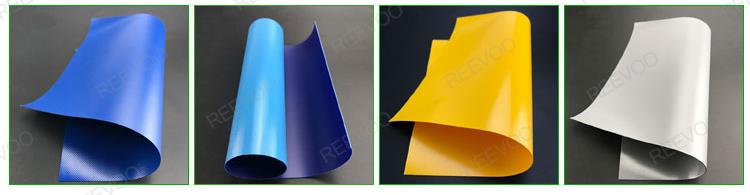
Our PVC tarpaulin material:
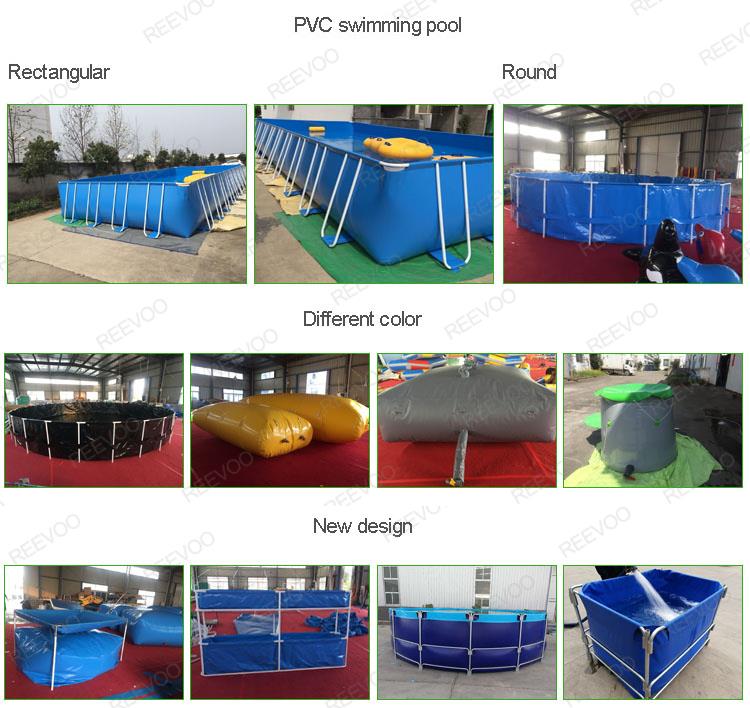
Our advantage:


Any interested pls kindly contact us:
reevoo@reevoo.net.cn
Hot Tags: collapsible fish tank, China collapsible fish tank manufacturers, suppliers, factory


