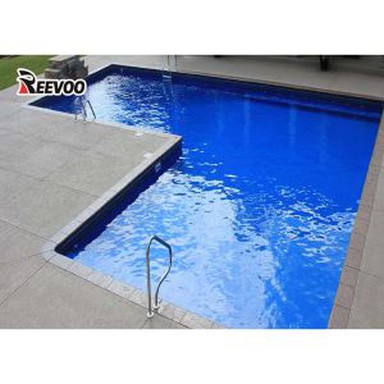


Flexible Fish Pond For Fish Farm
The oceangoing (anadromous) form, including those returning for spawning, are known as steelhead in Canada and the U.S. In Tasmania they are commercially propagated in sea cages and are known as ocean trout, although they are the same species. Like salmon, steelhead return to their original...
- Fast Delievery
- Quality Assurance
- 24/7 Customer Service
Product Introduction
Material filter:
Biological aerated filter (BAF): In RAS, the BAF serves as the core treatment unit of the entire system and is generally divided into two stages of treatment: fixed bed (fixed brush packing) and flowing bed (porous suspended packing). The principle is mainly to remove pollutants from the system through the adsorption and retention of pollutants by fillers, the metabolism of microorganisms, and the hierarchical capture of pollutants along the flow chain in the reaction tank. The organic filter tank converts the majority of pollutants (TAN, NO2-- N, organic matter, etc.) that are harmful to the aquaculture waste into nitrate (or not reaching the toxic concentration of the aquaculture waste) and other organic substances that are harmful to the aquaculture waste. Since the success or failure of the RAS system directly depends on the operational efficiency of the filter, determining the optimal operating conditions of the filter will be particularly important, which is also the main direction for future research on the RAS system.
Drip flow filter: It is mostly cylindrical, with the upper part of the filter material sprayed through and discharged from the bottom. The filter materials are not filled with water between them, but rather sprayed by water. The surface of the filter material forms a membrane layer, and the filter material (such as filter balls and elastic fillers) is in a state of alternating adhesion, which can obtain good filling. Medium waste (N2, CO2, CO) overflows and desorbs during trickle filtration. Oxygen can be directly supplied to the air, and sometimes a fan can be configured to increase the flow of oxygen. The drip filter cannot recoil and does not allow the formation of excessive biofilm. Placing a microfilter or sand filter before the filter can significantly reduce the amount of organic matter. The material selection of drip flow filters is simple, and the accumulation of solid substrates can be deep or shallow. Drip filtration can be maintained clean and not easily blocked through a cascade of filters. The structure of the drip filter consists of a tank shaped outer shell and multiple plastic boxes (with leaking holes at the bottom) stacked in layers, which is economical, reasonable, and practical. The surface area of the drip filter can reach 250 m2/m3.
Split circuit: The process of ammonia nitrification to nitrite and subsequently to nitrate, increasing the flow rate through the particulate filter can have adverse effects on the stability of nitrification rate and system performance. In order to reduce investment and operating costs, the design of splitting the circuit separates the process. By adjusting the unique system, the fish's requirements are always met. Ensure that all components in the system are fully utilized. Based on extensive experience and careful calculations, only 30% of the amount is usually directed to the particulate filter, which ensures correct retention and bacterial contact time, ensuring efficient nitrification and more effective pathogen control. The design of the split circuit can increase or decrease the size of the filter by three times in order to achieve the same effect.
Advantages of split circuit design:
Even when the total ammonia level is low, the nitrification rate is relatively high and the quality is stable;
The feed profit rate is relatively high;
Improved pathogen control and reduced mortality rate;
The production process is faster and more predictable, operating costs are reduced, and investment is reduced.
Operation of the filter:
The particulate filter effectively removes ammonia nitrogen, organic matter, and SS from the wastewater through the oxidation and flocculation of particulate matter groups in the reactor, the adsorption and filtration of fillers, and the hierarchical capture of particulate chain in the particulate matter state system.
The micro pollutants in the filter are fixed for a long time, and the micro pollutants have a longer residence time in the reactor. Nitrosation bacteria and Nitrifying bacteria have enough time to accumulate, so as to achieve a good removal effect of ammonia nitrogen. It is the key to the successful operation of all closed cycle wastewater treatment systems (sea and fresh water), and the particulate filter is also the treatment unit with the highest investment and energy consumption in the closed cycle wastewater treatment system.
The principle of a filter is the same as that of other types of sewage treatment, except that the concentration of sewage in fish farms is much lower than that of other types of sewage. A sewage treatment method that does not require a higher organic load.
Key design points for particulate filter:
The organic filter is designed based on its ability to remove organic matter and nitrate ammonia into nitrate.
A solid filter is a solid treatment structure composed of fillers. The dirt is in contact with the long intermembrane space of tiny dirt on the packing table, so that the dirt can be purified.
There are filtering elements in the solid filter that can accumulate as much as possible per unit volume of surface area (decomposition of a certain amount of waste requires a certain amount of filler).
Water can flow freely, and the membrane cannot block the filter, ensuring that there is sufficient oxygen supply and transportation.
The particulate filter should meet the following requirements:
1) The treatment effect of the particulate filter can meet the strictest environmental requirements of various regions in any season.
2) No secondary pollution is produced.
3) The micro particles in the filler can rely on the growth of organic matter in the filler, and additional nutrients need to be added. Stop the engine and then make it start faster.
4) The buffer capacity of the particulate filter is large, and it can dynamically adjust the concentration peak to ensure that the particulate always operates normally, with strong resistance to impact loads.
5) The operation of the mining system is fully automated and stable, requiring careful operation. There are few vulnerable components, and maintenance and management are often simple. It is basically possible to achieve comprehensive management, with only the need to patrol for any machine malfunctions.
6) The body of the particulate filter is assembled for easy transportation and installation; When increasing processing capacity, only components need to be added, making it easy to implement; It is also convenient for separate processing under the condition of source dispersion.
7) The energy consumption of the particulate filter is low.
Reevoo is made of PVC(6P) material, which is flexible and easy to fold when empty.
Transportation savings (empty ship to your location) | fold or rolling time and space
Compatible with a variety of liquid working temperature | | - 40-90 degrees fast installation (3 minutes)
Without | plastic into the water without glue or residue | | durable thorn and wear resistant microorganisms
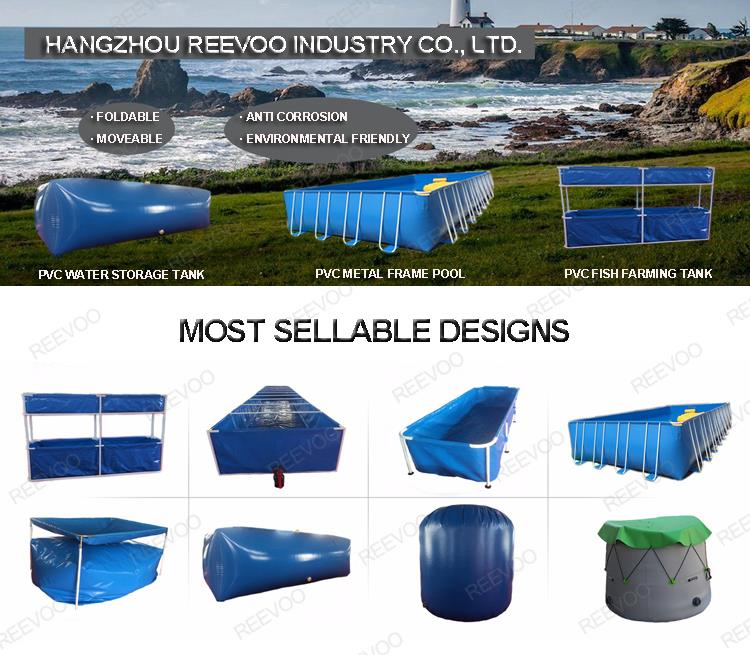


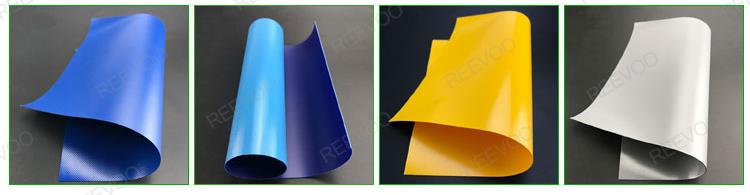
Our PVC tarpaulin material:
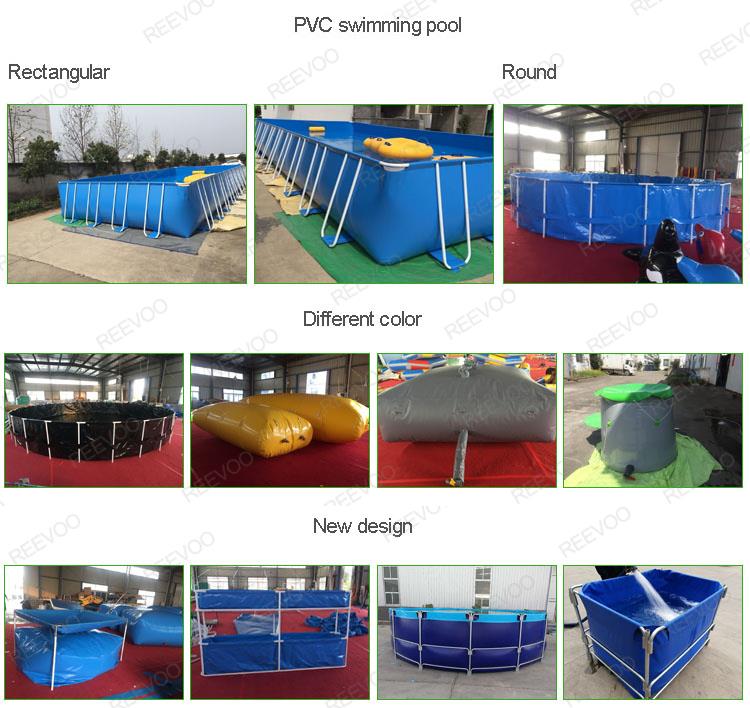
Our advantage:


Any interested pls kindly contact us:
reevoo@reevoo.net.cn
Hot Tags: flexible fish pond for fish farm, China flexible fish pond for fish farm manufacturers, suppliers, factory