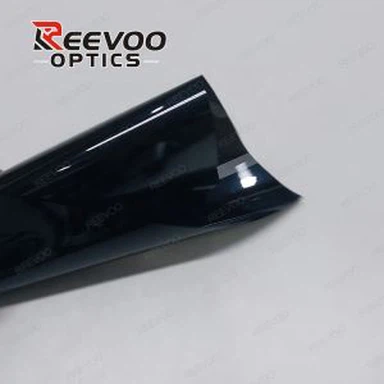


Pvc Pond Canvas
Spawning sites are usually a bed of fine gravel in a riffle above a pool. A female trout clears a redd in the gravel by turning on her side and beating her tail up and down. Female rainbow trout usually produce 2000 to 3000 4-to-5-millimetre (0.16 to 0.20 in) eggs per kilogram of weight. During...
- Fast Delievery
- Quality Assurance
- 24/7 Customer Service
Product Introduction
CO2 removal device:
The accumulation of carbon dioxide in high-density cycling aquaculture organisms is an important factor affecting the treatment and aquaculture effects. Carbon dioxide removal (decarbonization) is a key technique to ensure the stability of the pH value of aquaculture organisms. When the density of fish farming is between 10-20 kg/m3, the harm of carbon dioxide oxidation in the aquaculture body is not yet prominent. In the process of artificial fish farming, the breeding density increases significantly. When the fish farming density reaches 30-100 kg/m3, the artificial circulation and breeding system need to use pure oxygen to increase oxygen. At this time, fish respiration and organic degradation will produce a large amount of carbon dioxide, and the concentration of carbon dioxide in the body will gradually increase over time. Due to the negative correlation between the concentration of carbon dioxide and pH value, its alkaline removal process causes a rapid decrease in pH value, disrupting the acid-base balance of the organism, resulting in a decrease in the degradation efficiency of the organism, and posing common difficulties in controlling the quality of the circulating aquaculture system. High concentrations of carbon dioxide are also harmful to the growth and survival of fish. When their concentration exceeds a certain extreme value, it will be produced. Toxic effects can cause suffocation and death of fish. To quickly remove a large amount of carbon dioxide from high-density aquaculture bodies, specialized carbon dioxide removal techniques are necessary. At present, the aquaculture density of some fish in China is still at a low level of 10-30 kg/m3, and there is no deep understanding of the harm of CO2 in aquaculture. Therefore, there are few specialized reports on the research results and practical applications of CO2 removal technology. When the density of fish farming is developing towards modern technology of 30-100 kg/m, it is necessary to use pure oxygen method for oxygen supply. Therefore, in order to quickly remove a large amount of CO2 from high-density aquaculture bodies, specialized CO2 removal technologies are needed.
The main factors affecting CO2 removal rate are:
Initial CO2 concentration, circulating gas flow rate, gas volume, filler type, structural type of CO2 removal device, and flow rate of the conveying air. Increase the thickness and density of the filler layer appropriately; Design a relatively high elevation position; Choosing high-quality fillers and appropriate volume can both improve CO2 removal efficiency.
Gas exchange method for CO2 removal: A fan is used to transport a large flow of air to the CO2 removal device, and the free CO2 is continuously replaced by close contact with the gas. The decrease in CO2 concentration also results in a continuous decrease in the concentration of H ions in the gas, enabling the pH value to continuously rise and reach a new equilibrium state.
The higher the Q value, the higher the air flow rate of the conveying system, and the higher the CO2 removal efficiency. The most optimal CO2 removal rate corresponds to an optimal range of K values, with K values ranging from 6 to 9. The maximum flow rate Q for treatment is closely related to the structural design of the CO2 removal device, and foreign researchers recommend a pressure load rate of 17-24 kg/(m2 · s). When the filler is not used, the removal rate of CO2 also shows an upward trend with the increase of K value. However, due to the short contact time between particles and insufficient exchange of particles, it is difficult to obtain a higher CO2 removal rate. Therefore, selecting fillers with high porosity, less surface accumulation, and less prone to fouling, designing appropriate filler layer thickness and density, combined with appropriate K values, is beneficial for improving CO2 removal efficiency.
Reducing CO2 concentration can increase pH value:
A significant decrease in CO2 concentration can significantly increase pH value, and there is a typical negative correlation between CO concentration and pH value. The CO2 removal energy and efficiency of the device are strong, and the rate of pH adjustment is high, which reduces the acidity of the aquaculture system and is conducive to the acid-base balance of the circulating aquaculture system, avoiding the CO2 toxicity and potential harm of the aquaculture system.
The CO2 removal process is also a process of increasing oxygen in the body: by delivering a flow rate of air to the CO2 removal device, the air can exchange the free CO2 in the body and remove it from the system, reducing the CO2 concentration. Additionally, the air can increase oxygen production in the body. The DO value of the output is positively correlated with the increase of K value. Dissolved oxygen increased from 7.55 mg/L at the inlet to 8.62-9.04 mg/L at the outlet, indicating that the removal process of CO2 is precisely the process of increasing oxygen for the inlet of the body. The removal technology of CO2 should be applied to modern aquaculture systems, which can increase the unit yield by increasing the density of fish farming. It can also simplify the process and structure of the recycling and treatment system, reduce the subsequent chemical treatment load, reduce aquaculture costs, and improve comprehensive economic benefits; In addition, a stable pH buffer balance system can be established to reduce the operational risk of the entire aquaculture system and avoid significant losses caused by potential CO2 poisoning accidents.
The study of CO2 removal technologies and their optimized technical models that are in line with national conditions is of great significance for promoting the progress of high-density intensive fish farming technology and promoting the sustainable development of the aquaculture industry.
High density circular aquaculture will be the development direction of China's aquaculture industry in the future. CO2 has a significant impact on the treatment efficiency and aquaculture efficiency of circulating wastewater. The high concentration of CO2 in aquaculture can be effectively removed through the use of CO2 exchange technology in the circulating wastewater treatment system.
The main factors that affect the removal rate of CO2 include the initial concentration of CO2 in the body, circulating flow rate, volume of CO2, type of filler, as well as the structural type of CO2 removal device, the position and degree of inlet and outlet of CO2, the structural form of spraying and aeration devices, etc; The flow rate, temperature, and pressure of the conveying air can have a significant impact on the CO2 removal rate.
A common method for eliminating excessive CO2 in a circulating system is bubble diffusion or drip filtration:
Bubble diffusion: In a solid diffusion system, bubbles are formed, which separate and rise in the liquid, and eventually rupture on the surface. This process is both a release process and an oxygenation process. This type of filling can extract dissolved oxygen from the water and also provide sufficient oxygen to the filter.
Drip filtration: Drip filtration mainly involves nitrification and denitrification. The removal of impurities is effectively carried out through a series of devices that filter elements. The cost is relatively low compared to the debonding process of bubble diffusion, as bubble diffusion requires compression of the body and consumes more energy. The drip filter should be at least 200mm above the surface, and the flowing water should have sufficient charge here to eliminate the carbon dioxide produced by fish and organic matter filters.
Spawning sites are usually a bed of fine gravel in a riffle above a pool. A female trout clears a redd in the gravel by turning on her side and beating her tail up and down. Female rainbow trout usually produce 2000 to 3000 4-to-5-millimetre (0.16 to 0.20 in) eggs per kilogram of weight. During spawning, the eggs fall into spaces between the gravel, and immediately the female begins digging at the upstream edge of the nest, covering the eggs with the displaced gravel. As eggs are released by the female, a male moves alongside and deposits milt (sperm) over the eggs to fertilize them. The eggs usually hatch in about four to seven weeks although the time of hatching varies greatly with region and habitat. Newly hatched trout are called sac fry or alevin. In approximately two weeks, the yolk sac is completely consumed and fry commence feeding mainly on zooplankton. The growth rate of rainbow trout is variable with area, habitat, life history and quality and quantity of food. As fry grow, they begin to develop "parr" marks or dark vertical bars on their sides. In this juvenile stage, immature trout are often called "parr" because of the marks. These small juvenile trout are sometimes called fingerlings because they are approximately the size of a human finger. In streams where rainbow trout are stocked for sport fishing but no natural reproduction occurs, some of the stocked trout may survive and grow or "carryover" for several seasons before they are caught or perish.



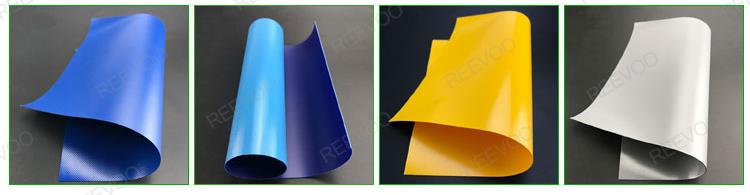
Our PVC tarpaulin material:
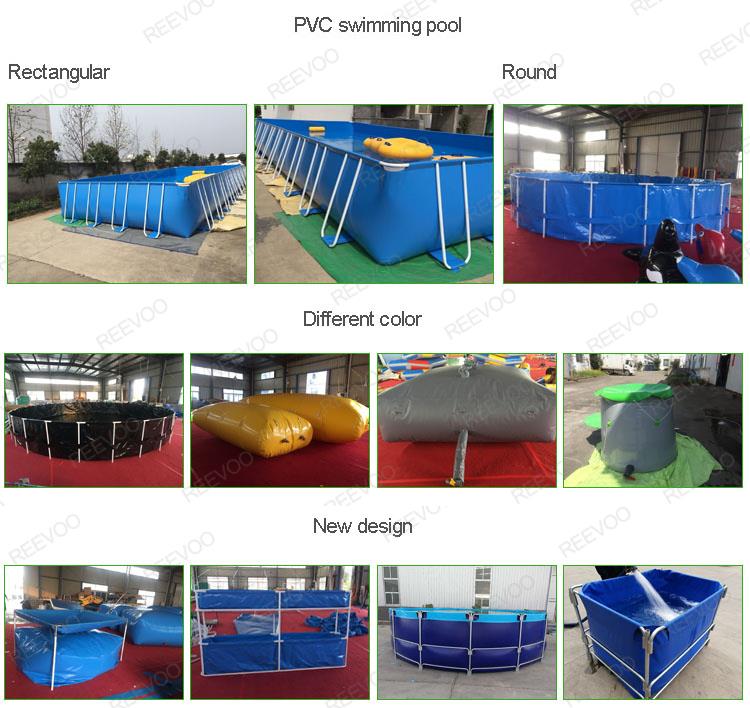
Our advantage:


Any interested pls kindly contact us:
reevoo@reevoo.net.cn
Hot Tags: pvc pond canvas, China pvc pond canvas manufacturers, suppliers, factory