


Frame Canvas Pond
Freshwater resident rainbow trout usually inhabit and spawn in small to moderately large, well oxygenated, shallow rivers with gravel bottoms. They are native to the alluvial or freestone streams that are typical tributaries of the Pacific basin, but introduced rainbow trout have established...
- Fast Delievery
- Quality Assurance
- 24/7 Customer Service
Product Introduction
Foam separator (egg separator):
The egg separator, also known as the egg separator, uses a jet to shoot air (or ozone) into the bottom of the tank, causing a small amount of fine bubbles to form at the bottom of the treatment unit. The fine bubbles rely on their strong surface tension and surface energy during the upward flotation process to adsorb the flocs, cellulose, and egg matter in the aggregated tank. As dissolved substances (or particulate organic impurities) rise, pollutants and other impurities are carried to the surface, Produce foam and remove it through the drain device at the top of foam separator. Because foam separation technology has a particularly prominent advantage in removing fine organic particles, foam separator is widely used in RAS.
Egg separator: (Protein skimmer) ⼜ is called egg separator, egg separator, egg melting, nitrogen melting, egg skimmer, egg skimmer, egg skimmer, foam fractionator. It is the principle that the bubbles on the surface of the bubbles can absorb all kinds of granular dirt and soluble organic substances mixed in the bubbles. The oxygen collecting and charging equipment or vortex pump can produce bubbles of a certain amount, and the bubbles will be purified through the egg mass separator. These bubbles will all be concentrated in the bubbles to form foam, and foam will be collected in containers on the bubbles. It will become yellow liquid and be eliminated.
The working principle of the egg mass separator is very simple, but it can effectively use the surface tension of the foam to separate the egg mass in the egg. There are three types of egg mass separators: counter flow, pressure, and lifting (which have been basically phased out). In theory, an egg mass separator can separate 80% of egg mass in the soil, but its actual working capacity can only separate 30-50% of egg mass waste in the soil, which can reach 50% is already very good.
The contact surface of the egg shell separator is similar to the surface between air and liquid. For example, the contact surface formed by the surface of the metal box has a certain surface tension, so cellulose, egg yolk, and organic residues will inevitably accumulate here. In fact, if the surface area is expanded, such as producing foam, more cellulose, egg yolk and residue will be formed naturally on the surface. The viscosity of foam will change with the increase and expansion of surface foam and the gradual disappearance of foam. Therefore, the effectiveness of the egg mass separator lies in the surface area between the expanding body and the liquid, as well as its specific surface tension. However, the foam produced by foam is separated from the discharge of foam circulation in the tank, which is why the foam can be directly removed from the tank.
Advantages of egg protein separator:
1. It's not a filter, it's a simple machine;
2. It can separate organic matter before it decomposes into toxic waste, reducing the burden on the chemical system;
3. Increase the amount of dissolved oxygen in the air.
Disadvantages of egg quality separator:
1. Can oxidize trace elements such as iron, molybdenum, manganese, and other important trace elements in iron;
2. Can cause loss of salt;
3. After being atomized, seawater will not form pores and have strong corrosiveness;
4. While increasing oxygen, it will also emit CO2- a necessary component of coral.
Although egg mass separator has many advantages, it can only remove up to 80% of organic metabolites in the circulation. In order to achieve better results, the egg quality separator must be combined with an ozone generator.
It also contains substances that cannot be broken down by egg quality separators, including egg quality such as egg milk, as well as certain components of egg protein in amino acids. Usually, egg quality separators can only remove 30% to 50% of the substance. The more active the egg separator is, the more dynamic it requires.
With the expansion of animal inputs and surface proteins, in addition to the binding of proteins, other activities can also be produced. Firstly, a favorable factor is that a large amount of oxygen is injected into the air, which can promote bacterial decomposition of residues. However, this work will also remove carbon dioxide from the carbon box, and it will also cause a decrease in carbonate hardness and an increase in pH value. Due to the dense exchange of different monomers, namely carbon dioxide and oxygen, the oxygen content at the reaction contact point is extremely high, leading to the oxidation of major trace elements such as iron, molybdenum, and manganese outside of the reaction site. In addition, the impact on single celled xanthophyta is also divided into three parts, and the gel used to preserve trace elements will disintegrate due to this reaction. The net gas discharged from the egg mass separator is rich in oxygen, only containing a small amount of carbon dioxide, trace elements, and vitamins. Therefore, when using the egg mass separator, these substances must be added appropriately. However, this may also create special difficulties, especially when the egg mass separator must additionally rely on ozone for operation, the above reactions will be further enhanced.
The effect of temperature on egg separator: The temperature of the separator is determined by the residence time and liquid flow velocity. The calculation steps for the liquid flow rate for a given processed object are:
(1) Calculate the required amount of liquid based on the optimal amount of liquid and liquid;
(2) Calculate the cross-sectional area of the separator based on the optimal flow rate and the resulting flow rate;
⑶. Calculate the flow rate of the liquid based on the volume of the liquid and the product of the separator;
(4) Check whether the liquid flow is in a turbulent state under this flow rate condition, and repeat the above calculation by increasing the liquid flow accordingly.
This can determine the temperature of the separator.
Under the given conditions of temperature and liquid flow rate, the larger the separator, the longer its residence time, which is beneficial for the bubble to achieve the maximum adsorption capacity under the given conditions and ensure the treatment effect.
The separator must have a certain temperature:
The temperature of the separator affects the contact time between the organic matter in the separator and the foam. If the contact time is too long, the organic matter in the separator is discharged before being adsorbed, resulting in a decrease in removal rate,
It is not possible to increase the concentration of the separator without increasing the temperature of the separator to increase the contact time. It must have a fixed liquid column degree to ensure that the foam can be soaked when it rises to the foam layer. For a given treated material, if the cross-sectional area of the separator is large but the viscosity is low, even if the separator operates under optimal liquid and flow velocity conditions, it is not possible to achieve good removal efficiency. Because although the solid also has a sufficient residence time in the separator, for a given bubble, its residence time in the separator is very short, and it is discharged from the separator when the adsorption capacity is very high.
The residence time of liquid in the separator is mainly determined by the temperature of the separator, and the residence time of liquid in the separator is determined by the volume of the separator. The residence time of a bubble in water also varies with the concentration of organic matter.
The removal rate of organic matter is related to factors such as liquid concentration, flow rate, organic matter concentration, and the degree of separation. As the temperature increases, the residence time of bubbles and particles in the separator correspondingly increases, and the removal rate of temperature increases compared to that of the separator.
The stability of the bubble is affected by the excessive flow of the separator:
But when the flow rate and temperature of the separator meet the requirements, the removal efficiency of the separator may not be the highest and may decrease. This is because an increase in the rigidity of the separator is beneficial for increasing contact time and not conducive to the stability of the bubble,
The stability of the bubble, if the separator has been used for a long time, although it can have sufficient contact time, during the rising process of the bubble, the pressure inside the bubble changes significantly, causing the bubble to break and merge, particle size to change, reducing removal efficiency, and the separation effect of the separator.
The separation effect is related to the concentration of organic matter, and when the concentration of organic matter is determined, there exists an optimal
The degree of foam separator shall be 90-120cm, but the degree of separation required for different organics is not the same. The optimal removal rate of the separator varies with the concentration of organic matter, in order to ensure that the concentration of organic matter in the treated material meets the treatment requirements. For materials with different concentrations of organic matter, they come into contact with the foam inside the separator
The change in concentration of organic matter requires that the concentration of organic matter in the treated material meet the treatment requirements. For bodies containing different concentrations of organic matter, their contact time with the bubble in the separator varies.
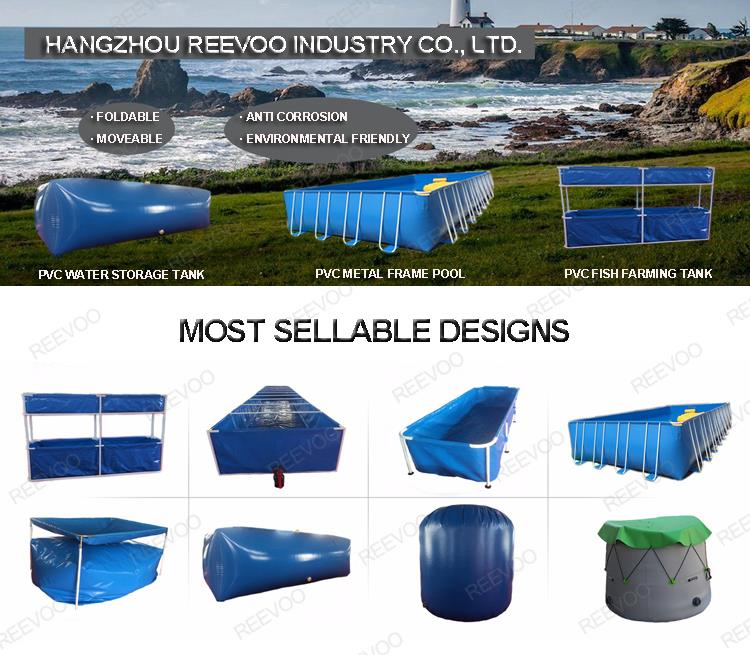


Freshwater resident rainbow trout usually inhabit and spawn in small to moderately large, well oxygenated, shallow rivers with gravel bottoms. They are native to the alluvial or freestone streams that are typical tributaries of the Pacific basin, but introduced rainbow trout have established wild, self-sustaining populations in other river types such as bedrock and spring creeks. Lake resident rainbow trout are usually found in moderately deep, cool lakes with adequate shallows and vegetation to support production of sufficient food sources. Lake populations generally require access to gravelly bottomed streams to be self-sustaining.

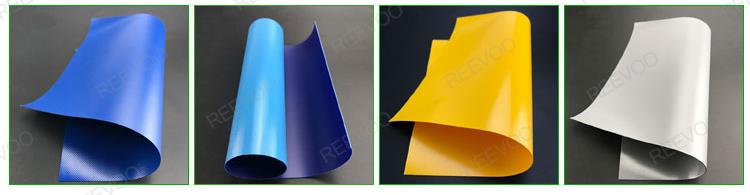
Our PVC tarpaulin material:
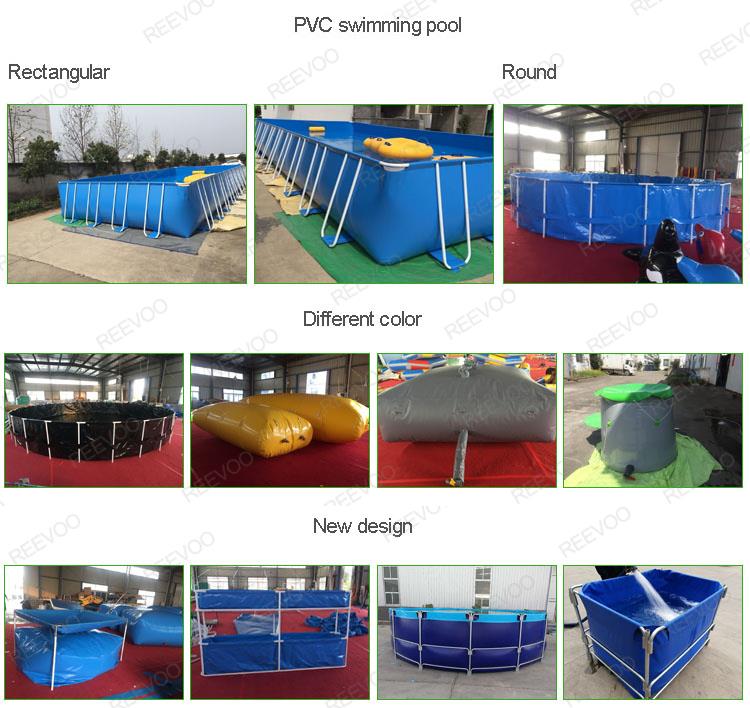
Our advantage:


Hot Tags: frame canvas pond, China frame canvas pond manufacturers, suppliers, factory


