


PVC material
May 31, 2018
PVC, the full name of Polyvinylchloride, ingredients for polyvinyl chloride (PVC), in addition to join other ingredients to enhance its heat resistance, toughness and ductility, etc. The top layer of the surface film is lacquer, the main component in the middle is polyvinyl chloride, and the bottom layer is back coated adhesive. It is a popular and widely used synthetic material in the world today. It is the second most used synthetic material in the world. According to statistics, in 1995 alone, PVC produced about 5 million tons in Europe, and its consumption was 5.3 million tons. In Germany, the average production and consumption of PVC is 1.4 million tons. PVC is being produced and applied worldwide with a growth rate of 4%. The growth rate of PVC in southeast Asia is particularly remarkable, thanks to the urgent need for infrastructure construction in southeast Asia. PVC is the most suitable material for producing 3d surface film.
PVC was first discovered by Henri Victor Regnault in France in 1835. The new material was subsequently discovered in 1872 by another German scientist, Eugen Baumann. At that time, PVC material was white solid, which was very fragile and had no practical application. At the beginning of the 20th century, a group of Russian chemists, Ivan Ostromislensky and Fritz Klatte, tried to change the fragility of PVC into a commercial product but failed.
Until in 1926 the United States Waldo Semon (B.F. Goodrich) of PVC was synthesized and applied for a patent in the u.s., he through the synthesis of a variety of additives solve the fragility of PVC, increase the expansibility of PVC material products, with the foundation of commercial products. In 1931, Germany began to produce PVC by emulsion method, and in 1941, the United States began to produce PVC by floatation method. Therefore, products related to PVC materials began to be widely used in production and life applications. With the continuous development of science and technology, the production and synthesis of PVC has been replaced by the ontology synthesis method, which makes it more efficient and greatly reduces the cost.
The basic features
The density of pure PVC is 1.4g/cm cubed, and the density of PVC plastic parts with plasticizers and fillers is generally 1.15-2.00g/cm cubed.
PVC products
PVC products
Hard polyvinyl chloride has good tensile, flexural, compressive and impact resistance, and can be used as structural materials alone.
The softness, breaking elongation and cold resistance of soft polyvinyl chloride will increase, but the brittleness, hardness and tensile strength will decrease.
PVC has good electrical insulation performance, can be used as low frequency insulation material, its chemical stability is good. Due to the poor thermal stability of polyvinyl chloride (PVC), heating for a long time can lead to decompose, release HCL gas, discoloring the polyvinyl chloride (PVC), so its application scope is narrow, using temperature generally between 15 to 55 degrees.
PVC is polyvinyl chloride, a plastic product made from 43 percent oil and 57 percent salt. Compared with other kinds of plastic products, PVC USES raw materials more effectively and reduces fuel consumption. At the same time, the energy consumption of PVC industry is very low. And at the later stage of the use of PVC products, it can be recycled and turned into other new products or incinerated to obtain energy.
Physical properties
The proportion of
1.38 g/cm3, molding shrinkage rate: 0.6 1.5%, molding temperature: 160-190 ℃, melting point 212 ℃.
The characteristics of
Mechanical properties, excellent electrical properties, strong acid and alkali resistance, good chemical stability, but low softening point. Suitable for making thin plate, wire and cable insulation layer, sealing parts, etc.
Molding characteristics
Amorphous material, moisture absorption, liquidity is poor. In order to improve the liquidity, prevent bubbles, plastic can advance dry. Mould gating system should be short, the appropriate gate section is big, can not have a corner. Mold cooling, surface plating chromium;
2. Due to its corrosion and fluidity, it is better to use special equipment and molds. All products shall be supplied with different types and quantities of additives as required;
3. It is easy to decompose, and it is easy to decompose with steel at a temperature of 200 degrees.
4. When using screw injector nozzles, the aperture should be large to prevent dead Angle retardation. It is better not to carry inserts, if any, preheat the inserts.
You Might Also Like
-

Coated Fabric PVC Tent Material for Canopy cover,Shelter ...
-

digital flex printing material media laminated PVC frontl...
-

RV-Hpanama-800(1010) best hybrid tent fabric tarpaulin ma...
-

4mil sound proof self-adhesive window tint smart glass fi...
-
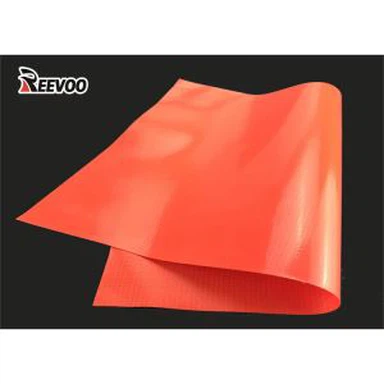
Fireproof Orange Tarpaulin Shelter cover Tarp Material Fo...
-
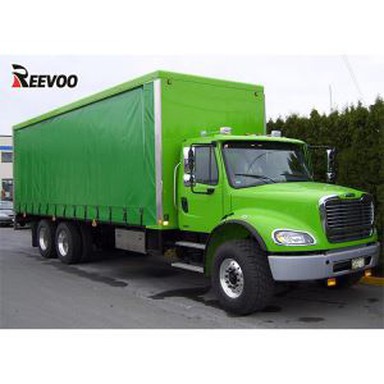
PVC Coated Tarpaulin waterproof fabric-PVC Tarpaulin supp...