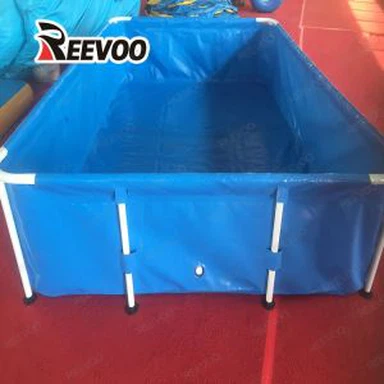


Tarpaulin Fish Farm Tanks
Growout Growth rates vary depending on water temperature and management strategies. To achieve superior growth rates fingerlings should be regularly graded into size classes, either in tanks or in earth ponds, until they reach 150mm. This prevents excessive size variation at harvest and...
- Fast Delievery
- Quality Assurance
- 24/7 Customer Service
Product Introduction
The main processing units of the RAS in the circular aquaculture system
1. Breeding Pond:
In artificial farming, the removal of N and P in the soil mainly relies on a large amount of feces and residual bait (removed from the source), followed by soil purification. The technology of diverting sewage from aquaculture ponds is crucial as the first step of the sewage treatment system, and it is a prerequisite for achieving system purification.
The traditional single channel bottom discharge mode, which is mainly adopted in China at present, has a relatively simple structure but cannot be removed effectively
Foam and oil stain on the surface of fishpond:
The technology of diverting sewage from aquaculture ponds is the mainstream technology in foreign fish ponds. It is a combination mode of bottom discharge and surface overflow, that is, through the bottom discharge, precipitated particles are effectively discharged, and a multi groove or porous flat overflow pipe is set on the surface of the fishpond, so that the oil and foam floating on the surface of the fishpond can achieve a good removal effect. At the same time, it also plays a role in maintaining the position of the bottom. It has become an alternative technology to the traditional single channel bottom discharge mode.
Design of sedimentation tank:
In artificial farming, the removal of N and P in the soil mainly relies on a large amount of feces and residual bait (removed from the source), followed by soil purification.
The sedimentation tank is an important facility for the main treatment of solid pollutants in wastewater. The most commonly used sedimentation tank is a heavy metal separation facility, which uses heavy metal sedimentation to separate suspended particles with higher density from the natural environment. A well-designed sedimentation tank can remove 59% to 90% of suspended solids.
According to needs, primary sedimentation tanks and secondary sedimentation tanks can be set up. The sedimentation tank is generally built on a vertical position, with a flexible water supply system based on the height difference. Its structure is mostly made of reinforced concrete, with inlet pipes, supply pipes, sewage pipes, and overflow pipes. The bottom drainage slope of the tank is 2% to 3%, and the volume should be 3-6 times the maximum amount of fish raised.
The commonly used inclined plate sedimentation tank is equipped with several plastic inclined plates inside the mud tank. The liquid overflows from the bottom to the top through the inclined plate, and the solid substances in the liquid settle on the inclined plate. Due to the long-term placement of the inclined plate in the soil, its surface becomes a porous film. Organic membranes can decompose toxic chemicals such as ammonia nitrogen in the air to purify the environment.
The key to design is that the settling flow rate of suspended solids should be less than 4 m3/min, and the appropriate flow rate is 1 m3/min; The flow rate per unit volume is between 1.0 and 2.7
m3/m2h。
Although natural sedimentation has a good effect, due to the low flow rate limiting the circulation flow, it will reduce the breeding density and efficiency, so comprehensive consideration is needed.
The residual feces and other impurities that settle at the bottom of the breeding pool are discharged through the sewage pipe at the bottom of the pool and enter the vertical flow sedimentation tank. The vertical flow sedimentation tank enters in a circular and radial direction, settling the impurity particles as much as possible at its bottom for easy discharge from the bottom of the sedimentation tank. Arranged in the upper part of the device;
Regularly open the valve at the lower part of the device to discharge the aquaculture sewage that has settled at the bottom. The portable microfiltration machine that removes aquaculture waste is fed into the circulating sewage treatment system for reuse.
The vertical flow precipitator can achieve a removal efficiency of over 80% for solid particles such as residual bait and feces.
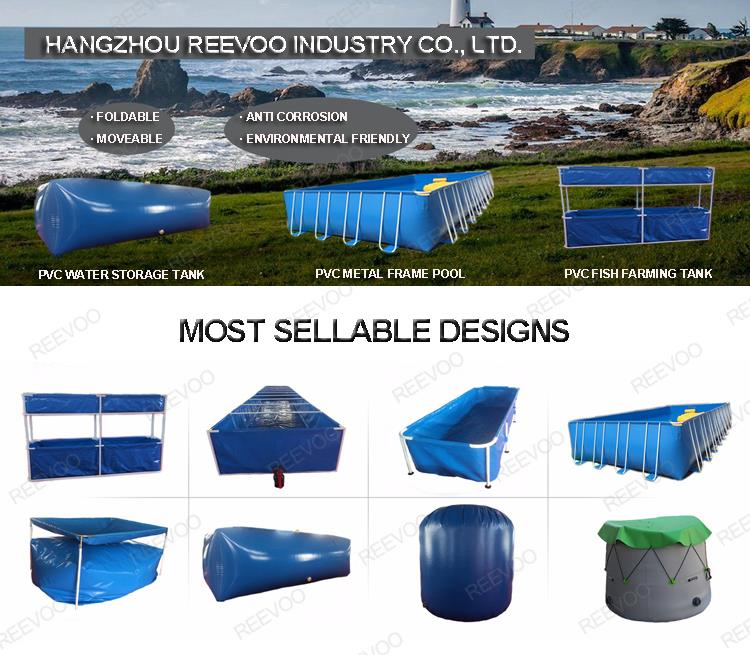


Growout
Growth rates vary depending on water temperature and management strategies. To achieve superior growth rates fingerlings should be regularly graded into size classes, either in tanks or in earth ponds, until they reach 150mm. This prevents excessive size variation at harvest and inefficient feeding rates.
Stocking density
The current industry experience suggests that stocking rates in ponds should be up to a maximum of 15,000 fish per hectare, although no systematic research has been undertaken on husbandry practices. In tanks, the stocking density depends on the capacity of the system but appears to be at least comparable with those used for barramundi.
Prior to stocking, ponds are drained, well dried and, if necessary, limed and cultivated. They are then filled with water that has been passed through a filter screen to exclude predators. In recirculation systems, jade perch have been reported to reach 450g in 4 months and 800g in 7 months from an advanced fingerling size. Maximum densities are usually about 40-50kg per cubic metre.
Careful management of stocking densities and feed rates will prevent excessive ammonia concentrations.
Feed
Jade perch are omnivores. They eat zooplankton, small crustaceans, aquatic insects, molluscs, algae and plant material. Although no specific research has been conducted on their dietary requirements, commercially available artificial diets are readily accepted at both fingerling and adult stage.
Pellet size varies with the size of the animal. The food conversion ratios (FCR) vary depending upon the level of management with 1.2:1 for fingerlings to 1.6:1 for growout being achievable. Care should be taken when feeding, as jade perch are voracious feeders and overfeeding can occur. Netting or the placement of nylon scarewire across ponds will assist in the control of bird predation.
Harvesting
Ponds are primarily harvested using seine nets, either partially or for a complete harvest.
It is critical to harvest fish in good condition to ensure fish are not stressed during purging and transport to market. Purging the fish in clean water for 7-14 days depending on temperatures normally removes any off flavours. The addition of salt is recommended for purging.
Live fish marketing suggests that fish should be sold in the 650-1000g size; however, no detailed market studies have been completed.

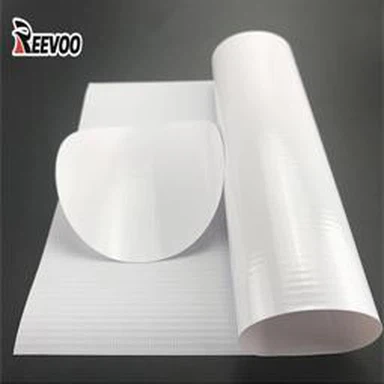
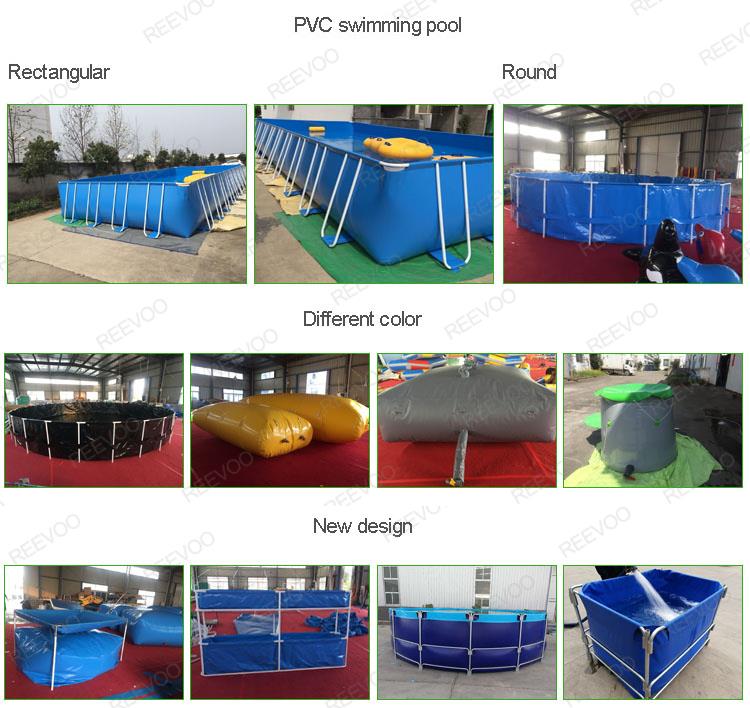
Our PVC tarpaulin material:
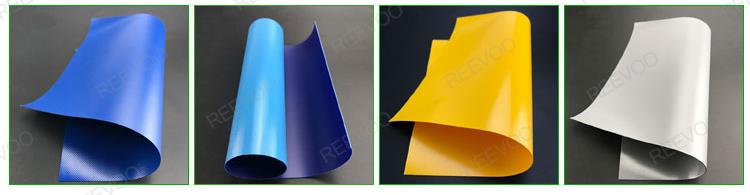
Our advantage:


Any interested pls kindly contact us:
reevoo@reevoo.net.cn
Hot Tags: tarpaulin fish farm tanks, China tarpaulin fish farm tanks manufacturers, suppliers, factory